

A real highlight of our first trip to Indonesia, Ubud is a must-see in Bali. Nine years later, we were excited to come back and explore Ubud as a family and see if the magic was still there. Between lush green rice fields, sacred temples, local markets, and unique local experiences, discovering Ubud means diving into the cultural and spiritual heart of the island. In this article, we take you with us to discover what to do in Ubud, from must-see spots to more authentic moments, through our itinerary and experiences.
Back to Ubud: Bali’s cultural and tourist center
Sunday, February 8, 2026
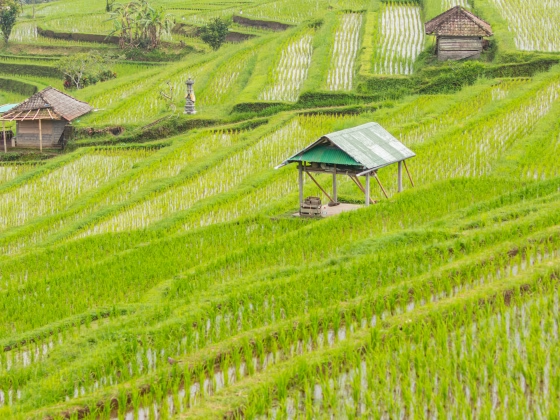
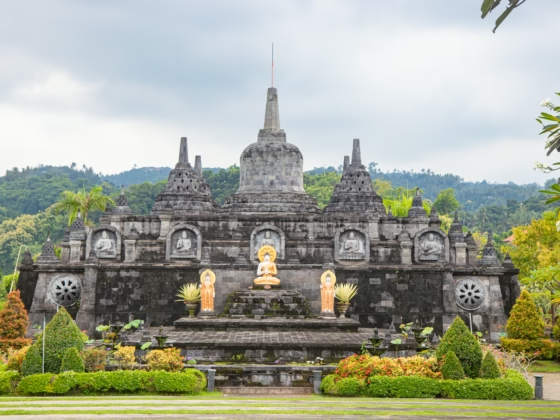
We arrive in Ubud in the late afternoon with great excitement, after a 2-day itinerary to visit central Bali, between waterfalls, a Buddhist monastery, coffee tasting, and the terraced rice fields of Jatiluwih. We are happy to be back in Ubud after all this time, but also curious. What has Ubud become today, with the rise of tourism in Bali? Has the town managed to keep its charm and preserve its authenticity? Will we still find what we loved so much about it on our first trip? One thing is certain: can’t wait to rediscover Ubud’s highlights and see what this iconic destination still has to offer.

In Ubud, traffic is dense and sometimes chaotic, especially when approaching the city center. It takes us a long time to reach our hotel in downtown Ubud, where we will stay for the next five days. As we drive along the main street, eyes glued to the window, we discover a lively town filled with scooters, cars… and plenty of tourists. Well, here’s five more! 😆 Our hotel, located right in the heart of Ubud on a very busy street, contrasts sharply with the chaos outside. As soon as we step through the door, the noise fades away: birdsong takes over, and a calm, soothing atmosphere sets in. A true bubble of serenity in the middle of Ubud’s hustle and bustle.

In the evening, we head out to explore downtown Ubud, which comes alive as night falls. The local market is a must-see in Ubud. You’ll find Balinese handicrafts, all kinds of souvenirs, traditional clothing, and tons of trinkets. We spend a long time wandering through the lively, bustling aisles, much to the delight of Yarana and mom, who love shopping. Then we end the evening at an Indian restaurant. To make up for the rather average lunch earlier in the rice fields of Jatiluwih, we treat ourselves to a real, hearty feast. We even leave with some very full doggy bags!


Where to stay in Ubud: our peaceful hotel in the city center
Monday, February 9
During our 5-day stay in Ubud, we stay at Arana Garden Ubud, a hotel close to the city center. Our three rooms are located side by side facing the pool. They are spacious, with a large bed covered by a long mosquito net and a simple but practical bathroom. In the morning, we naturally gather by the pool for breakfast. After a refreshing swim (the night was rainy but warm), we sit cross-legged to enjoy our pancakes, fresh fruit, and scrambled eggs.


Discovering Ubud on foot: traffic, atmosphere, and local life
We then set off to discover Ubud and its lively city center. As soon as we leave the hotel, the sounds of the city hit us from all sides: heavy traffic, constant scooters, horns, street vendors, music spilling out of shops. It’s vibrant and frenetic. Getting around Ubud on foot requires constant vigilance: sidewalks are often blocked by parked scooters, construction equipment, garbage bins, or restaurant tables. You always have to watch your step. And beware when you need to step onto the road to get around an obstacle. Here, pedestrians are clearly not a priority. It’s best to stay alert at all times to move safely through the streets of Ubud.


Street vendors are everywhere: taxi drivers, chauffeurs, women selling fans when the sun is out, umbrella sellers when it rains, and fruit or children’s toy vendors. We are constantly being approached from all sides, all the time.
Visiting the Water Palace: temple, gardens, and spirituality
A must-see when visiting Ubud is the Water Palace, located right in the city center and accessible on foot. It is also known as Pura Taman Kemuda Saraswati (the temple of sacred water springs). This sacred temple is dedicated to Dewi Saraswati, the Hindu goddess of knowledge. Entry to the Water Palace costs 60,000 IDR per person, about €3.20. For this price, besides visiting the temple gardens, we get a fresh orange or watermelon juice and traditional clothing to wear respectfully on site. We all end up with quite a look. On top of the traditional sarong and jacket, the men also get a headband. We look more like karate fighters than temple visitors. Of course, Lucas steals the show. “Namaste my brothers,” he greets us in a mysterious voice 😂.


The rainy season in Ubud means a hazy sky and an intense, oppressive heat. We discover the temple under a blazing sun, and the complimentary orange juice at the entrance is a welcome relief. The Ubud Water Palace is truly beautiful. It features traditional Balinese architecture, along with its stunning gates and classic statues. Stories from Hindu mythology are told through wooden and stone carvings. Only the gardens are open to the public. The rest of the temple is a sacred area dedicated to prayer, where visitors are not allowed.


The Water Palace lives up to its name: fountains, ponds filled with water lilies and lotus flowers, and flowing water jets. Water symbolizes purification and healing, and the palace’s sacred springs reflect its role as a place of cleansing, renewal, and spirituality. And indeed, despite the crowds visiting the site, a gentle sense of serenity still emanates from the temple.


Walking through Ubud’s rice fields
After visiting Ubud’s Water Palace, we take a small path that leads us up into the hills above the town. Here, the contrast is striking: far from the busy city center, the atmosphere is much more peaceful. A narrow path, accessible only to pedestrians and scooters, winds through Ubud’s rice fields in a soothing green setting. A few years ago, during our first visit to Ubud, these hills were made up entirely of endless fields. Today, the landscape is changing quickly. Many hotels and guesthouses have appeared, and others are still under construction. It shows how rapidly tourism is developing in Ubud. The contrast is very visible between locals harvesting rice in a traditional way and the luxurious modern resorts.


Many accommodations in Ubud now offer classes and retreats focused on well-being: yoga, meditation, relaxation, hypnosis, and alternative healing practices. Internationally known for its spiritual atmosphere, Ubud attracts many travellers seeking peace and disconnection. Many foreigners come here to join retreats, receive training, or simply slow down in a natural setting that encourages introspection. This wellness dimension is now an integral part of Ubud’s identity and plays a major role in its tourism appeal.


Harvesting rice in Ubud: an unplanned local experience
For her trip to Bali, mom really wants to harvest rice. However, it’s not easy to find an authentic rice harvesting experience. But along the trail, an elderly man is harvesting rice in a field. Lucas approaches him and kindly asks if we can help. We feel a bit embarrassed to interrupt his work, but he welcomes us with a smile. Despite the language barrier, he understands that mom wants to try harvesting rice. He happily agrees and shows her how to cut the rice using his sickle.
Together, they harvest several heavy stalks of rice. To collect the grains, the stalks are then threshed against a wooden board. The rice grains immediately come loose and fall onto a tarp. They are then gathered with a broom. It’s a very traditional, artisanal process, and we enjoy harvesting a bit of rice for several minutes.


The rainy season in Ubud: watch out for showers!
The rainy season in Ubud lives up to its reputation. Even though the days are usually hot and dry, the sky tends to cloud over in the afternoon, giving way to heavy tropical showers that can last for part of the evening or even all night. Fortunately, we were prepared. As soon as the first drops fall, we put on our rain ponchos, essential when traveling in Bali during the rainy season. Soon, a tropical downpour hits the hills of Ubud, and we make our way back down to town in the rain. We arrive soaked to the bone and take refuge in the first restaurant we find to eat and dry off.


It rains all evening without stopping. Our clothes are completely soaked from our walk in the hills of Ubud, especially our hiking shoes, but the humidity is so high that they struggle to dry. We are not done with the rain in Ubud, but isn’t that part of the city’s charm during the rainy season? Coming up in the next days: continuing to discover Ubud and Balinese culture, strolling through local markets and attending traditional dance performances.


![[Indonésie] Sumatra – Cap au Nord à Pulau Weh](https://i0.wp.com/live.staticflickr.com/65535/51158407006_c833dac727_k.jpg?resize=560%2C420&ssl=1)